39 fresnel light diagram
Black-body radiation is the thermal electromagnetic radiation within or surrounding a body in thermodynamic equilibrium with its environment, emitted by a black body (an idealized opaque, non-reflective body). It has a specific spectrum of wavelengths, inversely related to intensity that depend only on the body's temperature, which is assumed for the sake of calculations and … Some lights like the Aputure LS 300DII will have an additional option within the individual light fine adjustments menu to add a Bowens mount modifier like the Lightdome II or Fresnel 2x.
Fresnel Diffraction: Fresnel Diffraction occurs due to size of the obstruction. It is defined as the source of light and the screen in which the pattern of diffraction is obtained effectively at the limited or finite distance from the diffracting system. For eg. spherical or cylindrical wavefronts.

Fresnel light diagram
returning small amounts of light back towards the source as the light hits them. FRESNEL REFLECTION Whenever light traveling in a material (such as an optical fiber) encounters a different density material (such as air), some of the light — up to 4% — is reflected back towards the light source while the rest continues out of the material. strength and hence the light intensity at the point P. This idea is the basis of a simple optical device called a Fresnel zone plate. Figure 1 shows a vector diagram of field strength amplitude summation at point P created by odd Fresnel zones. It can be seen that the zone plate significantly Fresnel number N 0.5 1 2 4 8 10 20 2 = b N λz Fresnel number: Example: green light ( λ= 0.5 µm) a) slit width b = 1 millimeter = 2000 λ N = 1 at a distance of 2 meters b) slit width b = 10 microns = 20 λ N = 1 at a distance of 200 µm # of ripples ~ Fresnel number!-2b 2b Recall: this Fresnel calculation is only valid for z >> b, which is ...
Fresnel light diagram. moiré images generated by Fresnel zone apertures (FZA). We successfully confirmed the basic principle, experimentally. captured shadow with the image sensor and a virtual FZA in the . 2. Lensless light-field imaging method . Figure 1 shows a schematic diagram of lensless light-field imaging system which consists of a FZA, an image sensor, and a Fresnel And Fraunhofer Zone; Fresnel And Fraunhofer Diffraction Ppt; Fresnel And Fraunhofer Diffraction Diagram; Fraunhofer diffraction Wave pr opagation (Huygens & Fr esnel) Fresnel-Kir chhoff diffraction integral W aves and Dif fraction lecture 5 A diffraction pattern for which the phase of the light at the observation point is a linear function of the position for all points in the ... mirror and intensified the light and directed it outward. In 1823, the Fresnel lens improved illumination by concentrating and further intensifying light. Prisms were important in the process, which continued use of a reflector as well. A prism refracts light and a mirror reflects lights. Demonstrate these principles to visitors. The different components of Fresnel's Biprism experiment are shown in the diagram and the complete diagram is known as an optical bench. Let's understand about biprism. It consists of two thin acute angle prism joined at the base.
Figure 2: This diagram shows a Fresnel lens being used to collimate light from an LED. In "reverse", it can be used to concentrate parallel rays of light from a distant source onto a detector. Also shown is the effect of the source size on overall beam divergence. A Fresnel lens is a type of composite compact lens developed by the French physicist Augustin-Jean Fresnel (1788-1827) for use in lighthouses. It has been called "the invention that saved a million ships." The design allows the construction of lenses of large aperture and short focal length without the mass and volume of material that would be required by a lens of conventional design. May 14, 2018 — Wondering what Fresnel lights are? ... Fresnel lights are a tool found on almost any film industry (or theater) ... fresnel light diagram ... Dec 15, 2021 · set.a.light 3D STUDIO is the first photography studio simulator with allows you to construct lighting setups on your PC in advance and simulate the expected results - and makes perfect PDF lighting diagrams.
light with its electric field sticking up out of the plane of incidence (i.e., out of the page) We treat the case of s-polarization first: the xz plane (y = 0) Augustin Fresnel was the first to do this calculation (1820’s). Fresnel Equations—Perpendicular E field to develop a tiling approach to hologram construction and reconstruction, which computes the Fresnel propagation of light between parallel planes having different resolutions. A new method for hologram construction is presented, named partitioned hologram computation, which applies the concepts of the shifted Fresnel transform and tiling. viii Fresnel Lens Faced with the need to construct a large lens for a lighthouse of appropriate focal length , but unable to support the large weight of a double convex lens of that size, French physicist Augustin Fresnel (1788-1827) reasoned that it was the surface curvature which gave the focusing power. Apr 19, 2015 — Basics of Converging Lenses The converging, or convex lens, is able to bring parallel rays of light toward a focal point.
Principle of the Fresnel effect; the amount of reflection on ...
Fresnel, Century 6" Fresnel, 3" Fresnel (Inky) ... Shrerical Reflector Diagram. Spherical Reflector ... Flood = Lamp/reflector moves towards lens ...

LitePanels LED Sola 4 Daylight Fresnel - BarnDoor Lighting
The wavelength λ of the light used can then be found by using the formula S = λL d (2) 2.2 The Fresnel Birpism A Fresnel Biprism is a variation on the Young's Slits experiment. The Fresnel biprism consists of two thin prisms joint at their bases to form an isosceles triangle. A single wavefront impinges on both prisms; the left por-

How do Fresnel lenses work? - Explain that Stuff
Light Plot The Light Plot is a drawing indicating the placement of the lighting equipment in the theatre. The primary purpose is to depict, in scale, the exact location of all lighting instruments used in a production. It should show the location of the scenery in relation to the physical structure of the theatre.

14 Fresnel Light Illustrations & Clip Art - iStock
(a) Diagram of Fresnel diffraction of monochromatic light by a long, straight edge at x = 0, z = 0 and distant detector screen at z = Z. Three different photon scattering solutions are shown for n ...

Fresnel Images, Stock Photos & Vectors | Shutterstock
Nov 15, 2021 · In the diagram up top, the lens is just a piece of plastic, but that means that the detection area is just two rectangles. Usually we'd like to have a detection area that is ... The Fresnel lens condenses light, providing a larger range of IR to the sensor. ©Adafruit Industries Page 8 of 25. Image from BHlens.com (https://adafru.it/aKt) ...

Light Fresnel Rhomb Fresnel Integral Total Internal ...
Artwork: How the elements of a Fresnel lens in a lighthouse bend incoming light rays by different amounts to make a parallel beam of outgoing light rays. Redrawn from a historic illustration [Adolphe Ganot (1872) Natural Philosophy for General Readers and Young Persons, D. Appleton & Co., New York, p.328, fig.257], courtesy of Wikimedia Commons.

Stage Lighting for Students
Fresnel diffraction by a circular aperture • Suppose aperture size and observation distance chosen so that aperture allows just light from first Fresnel zone to pass – Only the term A1 will contribute – Amplitude will be twice as large as case with no aperture! • If distance or aperture size changed so two Fresnel zones are

Pin on Stage lighting
A Fresnel lens is a microstructure made of facets that bend or reflect light like a thick lens (see diagram). They can be made to either focus or spread light. These lenses are originated in our Diamond Turning Machine (DTM) Lab using a diamond tool to cut facets into a metal mold.

File:Fresnel lighthouse lens diagram.png - Wikimedia Commons
The Fresnel lens was produced in six sizes, called “orders.” The largest Fresnel lenses, such as the first-order lens, generally were reserved for large coastal lighthouses, and their light shines the farthest.

Basics - What is the Fresnel lens used in infrared sensors ...
L6-55. Fresnel Flashlight Purpose. To show an application of the Fresnel lens. Equipment. Fresnel and normal flashlights. Images. Description. A "Fresnel flashlight" has a Fresnel lens covering the central area of the glass, causing light which would normally spread out over a large cone to be focused into a nearly parallel beam.

Technical Theater Curriculum: Our Lighting Instruments
Jan 24, 2022 · With respect to light waves, the bending of light across edges of an obstacle is called 'diffraction'.In other words, it is the encroachment of light in the region of geometrical shadow of an obstacle. The figure depicts diffraction of light waves. There are two major types of diffraction viz. Fraunhofer and Fresnel. What is Fraunhofer diffraction
Indoor daylighting using Fresnel lens solar-concentrator ...
Weight about 7 lbs. (VG). $150. 2640-11. GLASS FRESNEL BUOY or DRUM LENS RED . Beautiful red glass Fresnel drum lens for use in lamps and other lanterns, etc. The lens measures outside rim diameter of 5 ¼" - 5 3/8", inside diameter range from 4 ½" - 4 ¾" and height of 5 7/8".

CAMTREE 1pc. SUN 6 Tungsten LED Fresnel Light
This diagram shows how the lawn lighthouse Fresnel lens works. The purpose of the lens is to adjust, alter, bend, and focus the light rays from the source and form a concentrated beam of light. The Fresnel lens, developed in 1822 by Augustine Fresnel, was the most magnificent lighthouse lens ever made.

Fresnel Lenses | How They Work – How I See It
light with its electric field sticking up out of the plane of incidence (i.e., out of the page) We treat the case of s-polarization first: This red dashed line represents the xz plane (y = 0), which is the plane of the interface. Augustin Fresnel was the first to do this calculation (1820’s). Fresnel Equations—Perpendicular E field

Gbr 300W Fresnel Light with Zoom Studio Light - China Profile ...
Start studying Fresnel Light. Learn vocabulary, terms, and more with flashcards, games, and other study tools.

Lighting – Theatre Design
The Fresnel equations (or Fresnel coefficients) describe the reflection and transmission of light (or electromagnetic radiation in general) when incident on an interface between different optical media.They were deduced by Augustin-Jean Fresnel (/ f r eɪ ˈ n ɛ l /) who was the first to understand that light is a transverse wave, even though no one realized that the "vibrations" of the wave ...

LED LIGHT PROJECTOR WITH FRESNEL OR PLANAR-CONVEX LENS, IN ...
THE FRESNEL ZONE LIGHT FIELD SPECTRAL IMAGER I. Introduction The Fresnel zone plate (FZP) is a di ractive optic with the resolving power of a lens of the same diameter [1]. Traditionally, one distinct advantage of the FZP over refractive optics is it can be used for imaging in spectral regions, such as extreme

Comparation of Fresnel vs. Lekolite: | Stage lighting design ...
The Fresnel lens is differentiated from traditional LED lamp,in terms of the design of focal length and distance,which establishes the effective emergent light angle. Compared to traditional products,the super thin structure of Fresnel lens enables improved light transmissibility,In addition,it could be applied for various purposes with its ...

Used Audio, Lighting and Video Equipment - Usedful.eu
Eyes are organs of the visual system.They provide living organisms with vision, the ability to receive and process visual detail, as well as enabling several photo response functions that are independent of vision.Eyes detect light and convert it into electro-chemical impulses in neurons.In higher organisms, the eye is a complex optical system which collects light from the …
G-Fresnel optical device-based miniature spectrometer (a ...
Fresnel-based lighting tools also use a focusing system to move the light in and out of the focal point. When the light is at the focal point (the "spot" position), the light is focused and hard, with the least amount of spread. In the "flood" position, the light spreads out wider and has softer shadows.

All About Glass | Corning Museum of Glass
Below is a diagram of a typical setup for reflectance or return loss tests of connectors or patchcords per industry standards (TIA FOTP-107 or IEC 61300-3-6) using a light source and power meter. This test is typically used for terminated patch cords when the loss and reflectance values are required specifications.
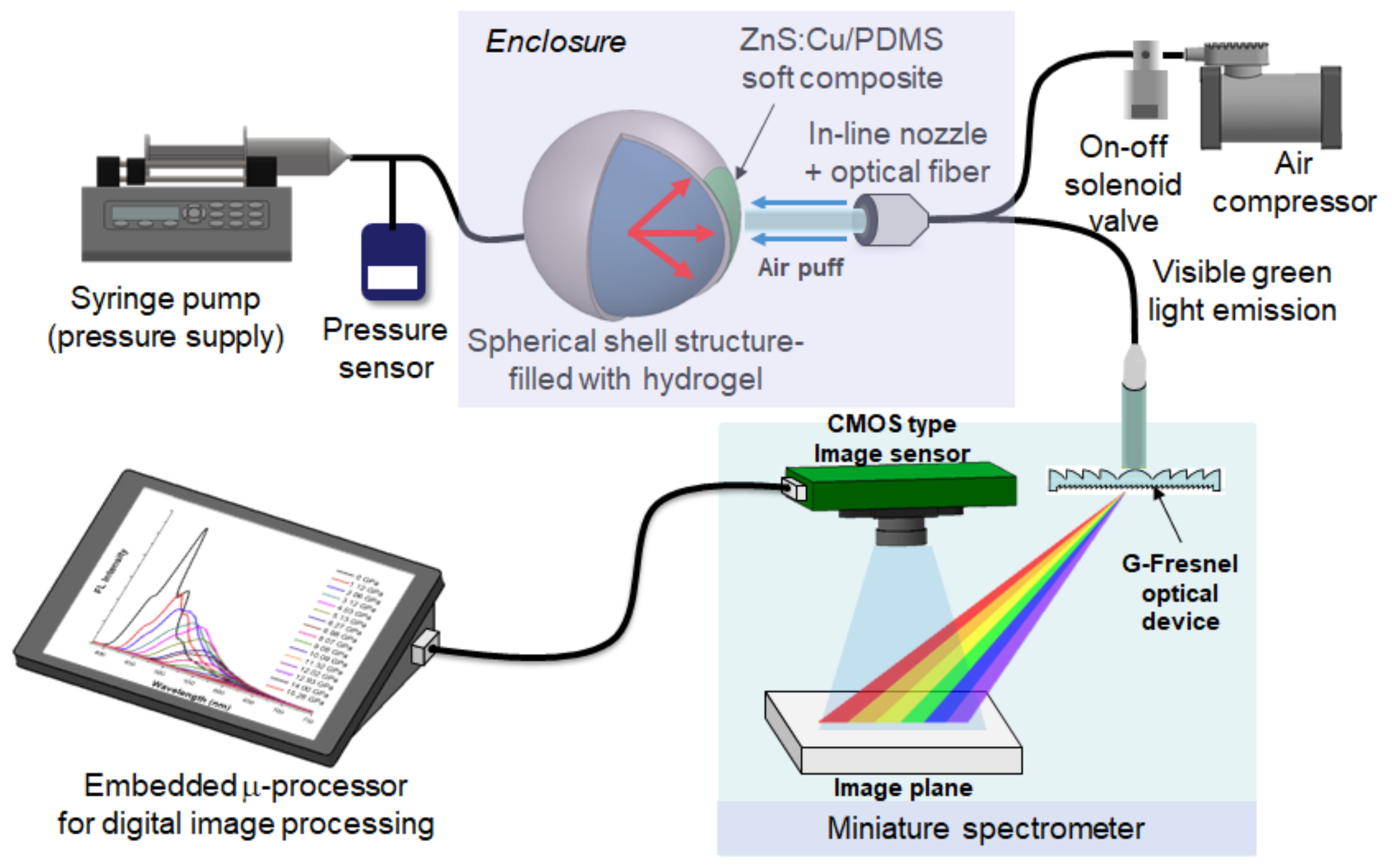
Sensors | Free Full-Text | A G-Fresnel Optical Device and ...
Fresnel number N 0.5 1 2 4 8 10 20 2 = b N λz Fresnel number: Example: green light ( λ= 0.5 µm) a) slit width b = 1 millimeter = 2000 λ N = 1 at a distance of 2 meters b) slit width b = 10 microns = 20 λ N = 1 at a distance of 200 µm # of ripples ~ Fresnel number!-2b 2b Recall: this Fresnel calculation is only valid for z >> b, which is ...

Nikon's Phase Fresnel (PF) lens explained - Nikon Rumors
strength and hence the light intensity at the point P. This idea is the basis of a simple optical device called a Fresnel zone plate. Figure 1 shows a vector diagram of field strength amplitude summation at point P created by odd Fresnel zones. It can be seen that the zone plate significantly
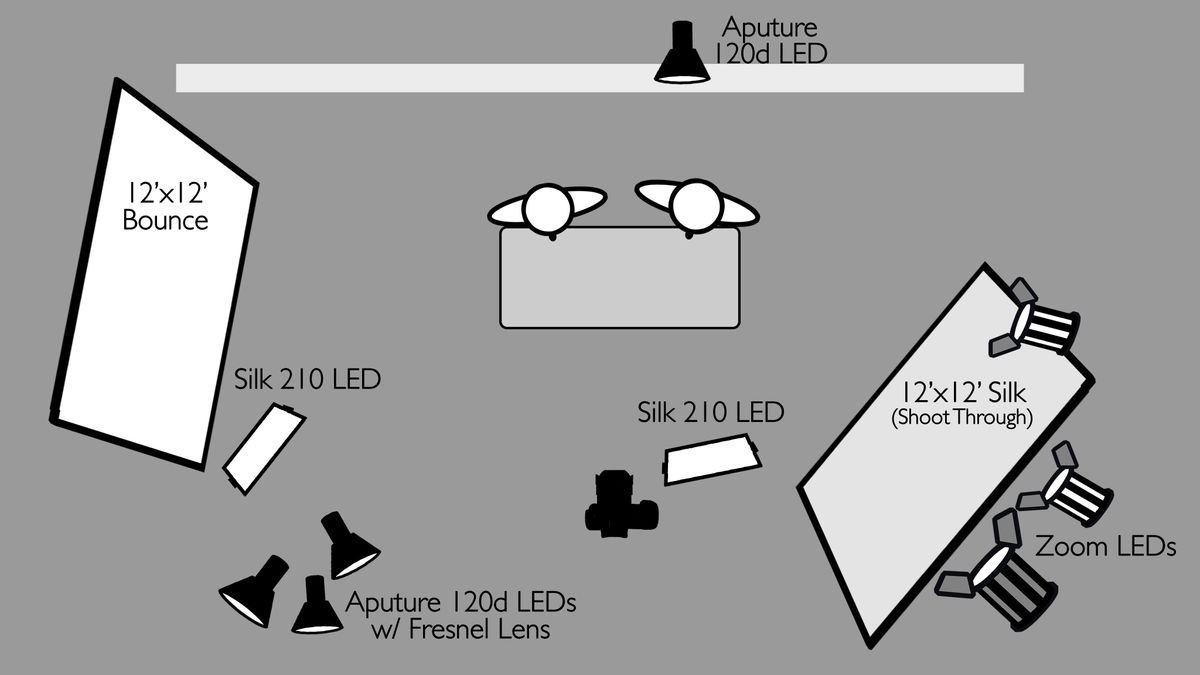
Light Diagram High Key Set
returning small amounts of light back towards the source as the light hits them. FRESNEL REFLECTION Whenever light traveling in a material (such as an optical fiber) encounters a different density material (such as air), some of the light — up to 4% — is reflected back towards the light source while the rest continues out of the material.

Fresnel Lens - an overview | ScienceDirect Topics

Lighthouse - Wikipedia

Fresnel Equations: What are they? (Derivation & Explanation ...
Stage Lighting Technician Handbook

G-Fresnel smartphone spectrometer (A) schematic diagram of ...

Fresnel Spotlight Diagram Diagram | Quizlet

1000W Fresnel Light - Honest

The most common focusable unit used in the theatre today is ...

Softbox Kit for Junior Fresnel 1000W - 80x60 cm

Stage Lighting for Students
Fabrication of Fresnel zone plate embedded in silica glass by ...

DEXEL Lighting | FRESNEL LED STUDIO PRO 400W RGBW-FRESNEL LED ...

a Schematic view of the 1D light intensity measurement of the ...

Physics Made Easy- Light Interference-Fresnel Biprism - Part ...

LIGHTING THE ACTING AREA THE general acting area is that ...


Comments
Post a Comment